Electricity, together
Your street has more bargaining power together
Households in your area join one bloc. Retailers compete for the group. You only switch if the offer beats your minimum.
Bill
Pay less than the standing offer
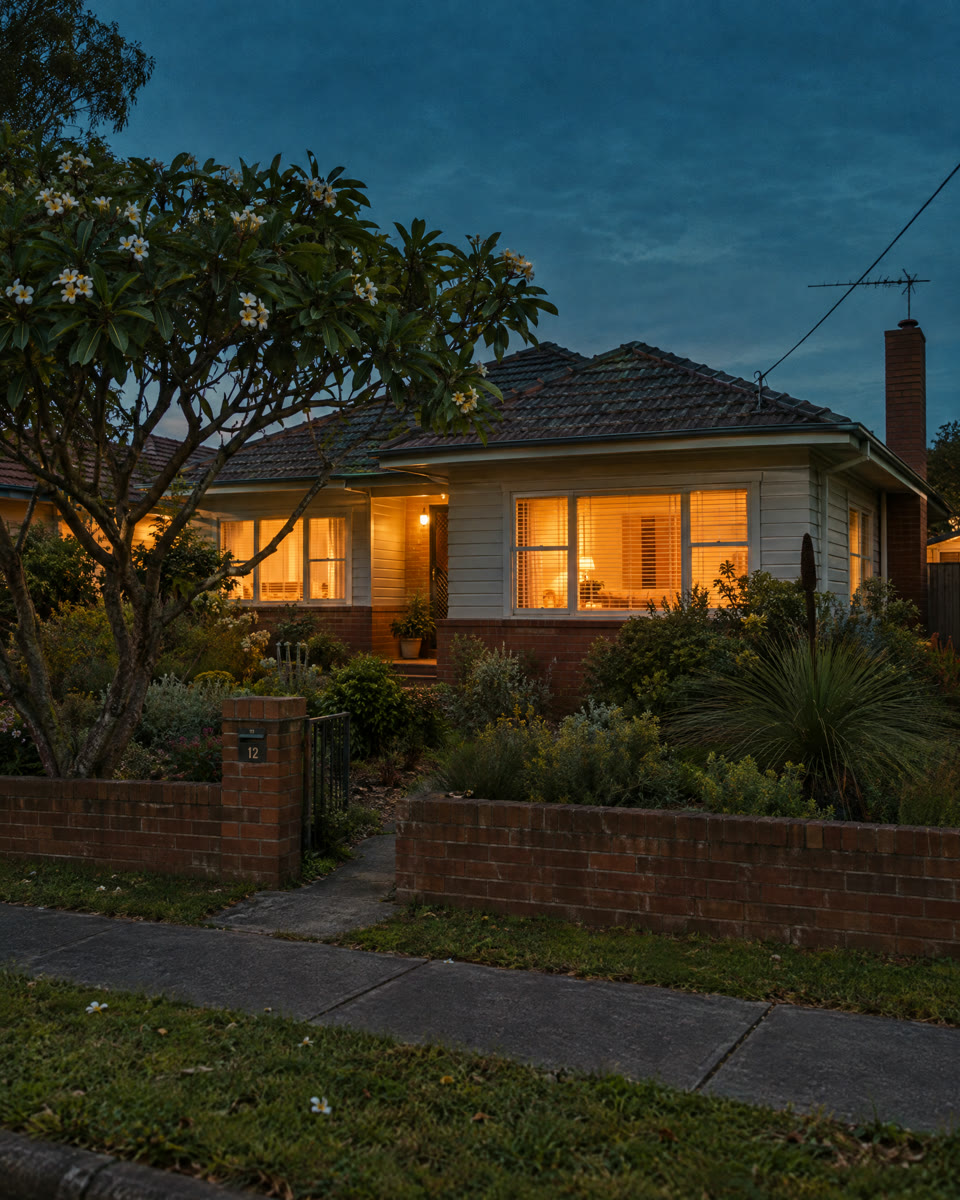

Leverage
Retailers compete for your whole street
Control
You set the minimum. You decide.
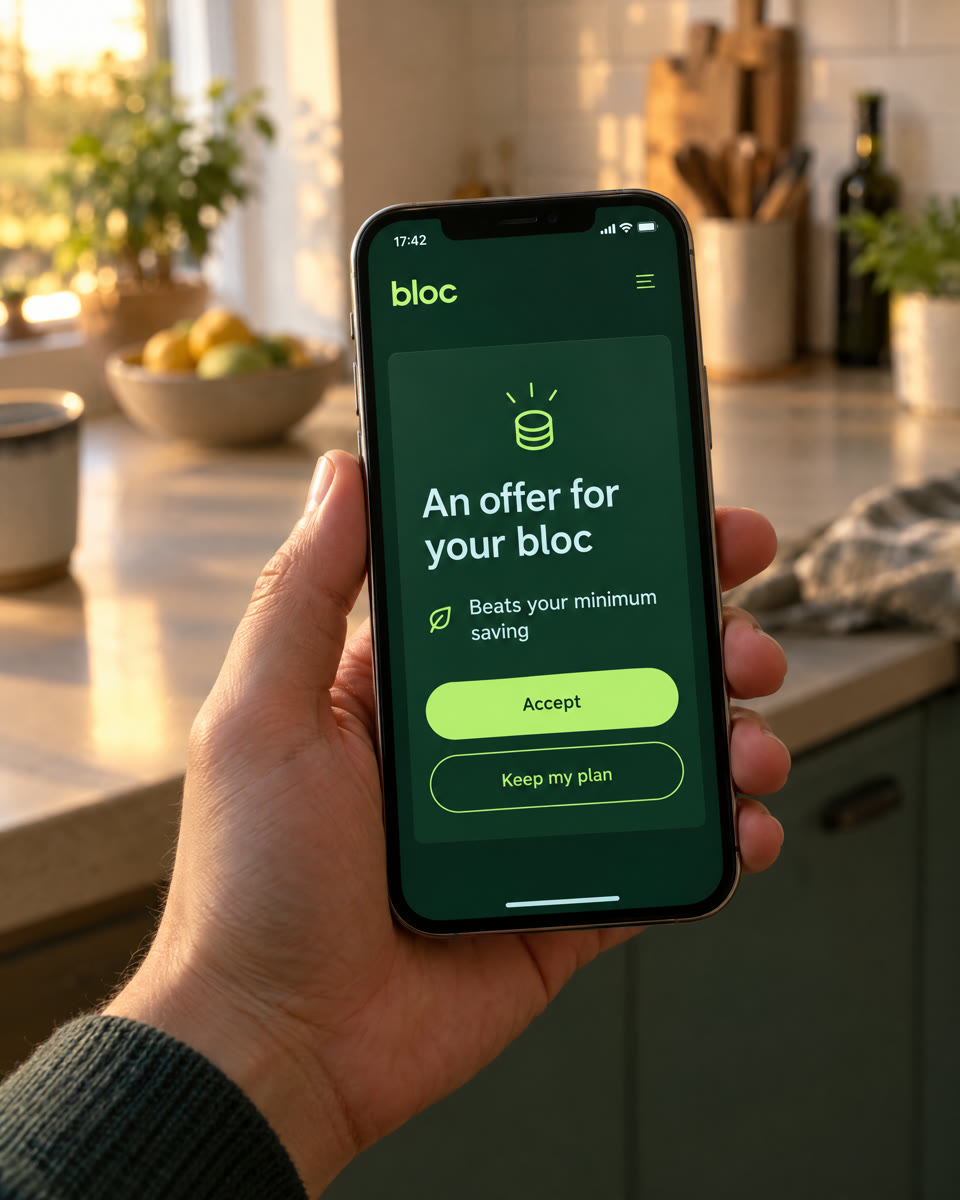

How bloc works
A better way to buy power for your home
Your bill joins your neighbours’. Retailers bid for all of you at once, and bloc prices the winning offer on your own usage.
How it works
From one bill to an area that bargains together
01 · Today
Today, every household negotiates alone.
Comparison sites help you shop across published offers, but the retailer still signs you up one at a time, on its terms. One bill has no leverage.
02 · Join
Bloc groups your area.
Upload a bill and you're grouped with households like yours: same area, similar usage, solar or not. Every light is a household with a real bill behind it.
03 · Compete
Retailers bid for the whole bloc.
You set the minimum saving worth switching for. Retailers see one defined group with real bills behind it, and bid for it. Nothing happens below your threshold.
04 · Decide
You decide, household by household.
The bargaining is collective; the offer is personal. Bloc works out what the winning offer is worth on your usage, and you confirm before anything changes. Nobody is switched automatically.
Why bloc
The market was built for households that never switch
Loyalty is taxed
$337 a year on the standing offer*
Retailers win you one household at a time
*What a typical Brisbane household on the standing offer pays each year over today’s cheapest public plan. 4,087 kWh a year on the Energex network, flat rate, no solar. Energy Made Easy, September 2026.
One street at a time
bloc turns a street of households into one customer retailers have to win
A growing bloc
Every household makes the bloc stronger
The more homes in an area join, the more a retailer has to offer to win them. Bring your neighbours and the whole street gets a better deal.

Step into a bloc
Free to join
No bill needed yet and no obligation to switch. We’ll tell you when your area’s bloc opens.

More power, together
For retailers
A better customer-acquisition channel for retailers.
Defined volume
See the number, location and usage profile of switch-ready households.
Lower acquisition friction
Bid once against a group that has each supplied a bill, rather than marketing household by household.
Demand certainty
Every member has already set the saving that would make them switch.
- Region
- QLD · South East
- Usage
- Matched band
- Solar
- 38% of homes
- Bills
- One per household
- Thresholds
- Stated per home
- Closes in
- 3 days
Retailers only ever see aggregate cohort data — never names, addresses or individual bills. Example data.
Open the retailer console →FAQ
Fair questions.
Is Bloc a comparison site?
No. Comparison sites help one household shop across published offers. Bloc groups households — each of which has supplied a bill — into a defined buying group, and has retailers compete for the group with offers that aren't on public comparison sites.
Do I have to switch?
Never. You set a minimum annual saving before joining, and nothing is switch-ready until an offer clears it. Even then, you review the offer and decide.
Why do you need my bill?
Your bill is what makes the group credible. It proves real usage and real current pricing, which lets retailers bid seriously and lets Bloc calculate your specific saving rather than a generic estimate.
What information is extracted from my bill?
Your current retailer and plan, billing period, total amount, electricity usage, and tariff details like usage rate, supply charge and any feed-in tariff. You review and can correct everything before joining.
How are households grouped?
By similarity: state and region, usage band, and whether you have solar. Grouping like-with-like means a single retailer offer can be priced fairly across the whole group.
How does Bloc make money?
The model is a fee from the retailer when a switch completes — similar to existing acquisition channels, but for a group at once. Households don't pay to join.
What happens if no retailer beats my threshold?
You'll see the best offer anyway, with an explanation of why it fell short, and you can stay in for the next round. You're never switched to something below your threshold.
Does Bloc switch me automatically?
No. When an offer clears your threshold you review the full details and explicitly confirm before any switch request is made.
What if my bill cannot be read?
You can enter the key details manually — it takes a couple of minutes. A profile entered that way is labelled as entered by you rather than read from a bill, so it is clear where the figures came from.
Is the offer based on my actual usage?
Yes. Every offer is applied to the annualised usage from your own bill to estimate your annual cost and saving. Annualising one bill ignores seasonality, so figures are labelled as estimates.